Final course project – 2024
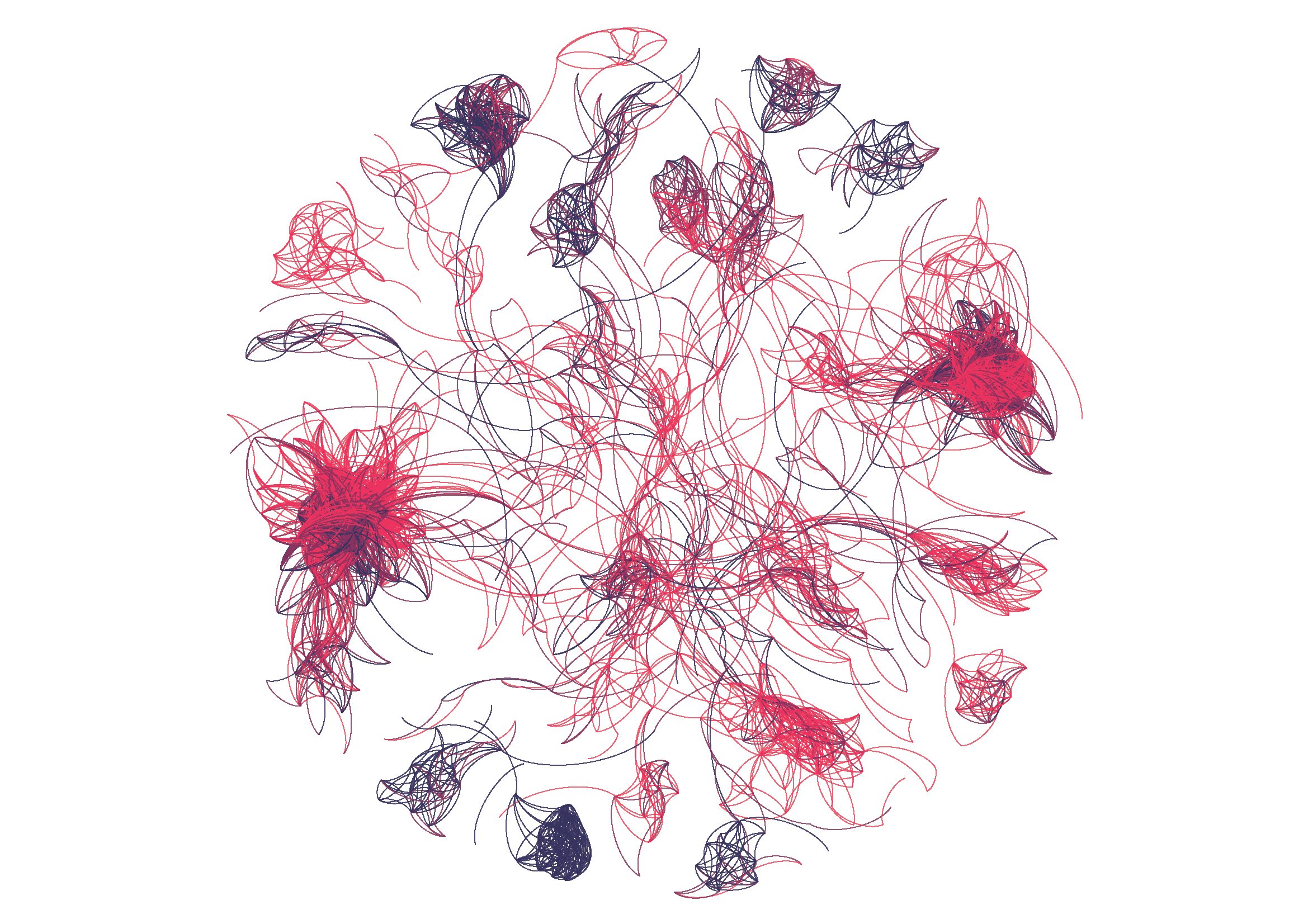
For the final course project (fcp), you will handle a real-world dataset. In particular, you are required to store, manipulate, and analyze naturally-occurring data emerging from a sample of 15 Decentralized Autonomous Organizations (DAOs). The stream of data centers on the Temperature Check (Snapshot Poll) step of the communities’ Governance Process.
DAOs are digital-first entities that operate without a central authority, using smart contracts to automatically enforce rules. Members, who hold the DAO’s native tokens, make decisions collectively. This decentralized structure sharply contrasts with traditional companies, challenging conventional managerial assumptions about organizational operation (Hsieh and Vergne, 2023). This innovative model has attracted interest from researchers across various disciplines, including information systems, management, and sociology.
Yet, the relevance of DAOs extends beyond academic curiosity; they also hold significant business implications. For instance, DAOs can streamline operations by reducing administrative overhead, enhancing transparency and trust among stakeholders, and facilitating global collaboration without the need for physical offices. Additionally, DAOs offer unique compensation structures, allowing contributors to earn tokens to complete specific tasks. Ultimately, DAOs may guide the next phase of organizational technologies, fostering more democratic, flexible, and fulfilling work environments based on remote collaboration.
A prime example is Uniswap, a decentralized exchange that operates as a DAO. Uniswap allows users to trade cryptocurrencies directly without intermediaries, using automated smart contracts. The DAO structure enables token holders to vote on important decisions, such as protocol upgrades and fee structures, ensuring that the community has a direct say in the platform’s development. This model has proven successful, with Uniswap becoming one of the largest and most trusted decentralized exchanges in the world. Uniswap’s experience demonstrates how DAOs can efficiently manage and grow complex projects, providing fresh business and research insights.

The first chunk of data comes from Snapshot. Snapshot is a decentralized voting system used by DAOs to make collective decisions. It allows token holders to propose and vote on various issues, such as protocol upgrades, project funding, and governance changes:
``Users can then create proposals for the space and vote on them. Space admins can define the rules for proposal creation and casting a vote by setting up voting and validation strategies. For example only users holding a minimum of 10K of specified token can create a new proposal and the voting power of users is proportional to the balance of the specified token in their wallet’‘ (Snapshot docs).
Snapshot’s key feature is its off-chain voting mechanism, which ensures that votes are transparent and easily verifiable. This platform is widely adopted within the Web3 community.


The second chunk of data contains address-level information collected from Polygonscan and Ethscan. The former is a blockchain explorer specifically designed for the Polygon network. It allows users to search and view detailed information about transactions, addresses, tokens, smart contracts, and blocks on the Polygon blockchain. Polygonscan provides transparency and accessibility, enabling users to track and verify on-chain activity. Ethscan is a similar blockchain explorer for the Ethereum network.
Tasks
You are required to choose your preferred DBMS – PostgreSQL or MongoDB – and:
- Clean, manipulate, and structure data. The expected result is a well-designed dataset that complies with the specific approach of the chosen DBMS.
- Provide valuable descriptive insights. The expected result is a set of descriptive statistics that depicts some interesting trends or noteworthy data characteristics.
- [optional] Perform insightful data analysis. For example, you can try to uncover how leadership emerges in such digital settings (Banks et al., 2022). If this topic does not fit your interests, you may want to skim through the reference list provided to get some inspiration.
To perform tasks 1 and 2, you need to use either SQL or MQL (MongoDB query
language). Alternatively, if you prefer using Python, you can leverage
psycopg2 or pymongo. For what concerns task 3, you should use PySpark
(e.g., you may want to leverage the
MLlib
pyspark library).
Data
The fcp is based on naturally-occurring data emerging from Snapshot,
Polygonscan, and Etherscan. The data can be retrieved at this
link.
In particular, you can find:
| PATH | content | source | content | size | # |
|---|---|---|---|---|---|
| snap-data-collection/.data/snap_dao_info.pickle | Spaces | Snapshot | DAO-level info | 30kB | 15 |
| snap-data-collection/.data/proposals/*.pickle | Proposals | Snapshot | Proposal-level info | 14MB | 6K |
| snap-data-collection/.data/votes/*.pickle | Votes | Snapshot | Vote-level info | 1.91G | 5.1M |
| snap-data-collection/.data/follow/*.pickle | Follows | Snapshot | Follow-level info | 126MB | 444K |
| polygonscan-data-collection/.data/*.pickle | Scan | Polygonscan | Wallet-level info | 2.7G | 218K |
| etherscan-data-collection/.data/*.pickle | Scan | Etherscan | Wallet-level info | 1.2G | 118K |
Data are stored in pickle format. Please, check
load_data.py
for an example of loading pickle files.
To get a sense of the data structure, I suggest you explore the available data either in MongoDB or Python. Also, check the APIs of Snapshot, Polygonscan, and Etherscan to get further info.
Deliverables
By July 19th (4:00 PM, London time), groups have to upload:
- SQL, JS, or Python scripts;
- Supporting documentation (accepted format: .md, .docx, or .pdf) containing:
- a detailed justification of your design choices;
- a clear and concise description of the insights coming from descriptive statistics obtained;
- [optional] a clear and concise description of further insights and results obtained analyzing data through PySpark.
Please keep the supporting document within 3,000 words excluding tables and figures.
References
Here you can find some practitioner-oriented pieces on DAOs:
- Jonathan Ruane and Andrew McAfee (2022). What a DAO Can — and Can’t — Do, Harvard Business Review.
- Steve Glaveski (2022). How DAOs Could Change the Way We Work, Harvard Business Review.
Here you can find some academic articles dealing with similar online software communities:
- Amrit, C., & Van Hillegersberg, J. (2010). Exploring the impact of soclo-technlcal core-periphery structures in open source software development. Journal of Information Technology, 25(2), 216-229.
- Baldwin, C. Y., & Clark, K. B. (2006). The architecture of participation: Does code architecture mitigate free riding in the open source development model?. Management Science, 52(7), 1116-1127.
- Banks, G. C., Dionne, S. D., Mast, M. S., & Sayama, H. (2022). Leadership in the digital era: A review of who, what, when, where, and why. The Leadership Quarterly, 33(5), 101634.
- Dahlander, L., & Wallin, M. W. (2006). A man on the inside: Unlocking communities as complementary assets. Research Policy, 35(8), 1243-1259.
- Gulati, R., Puranam, P., & Tushman, M. (2012). Meta‐organization design: Rethinking design in interorganizational and community contexts. Strategic Management Journal, 33(6), 571-586.
- He, V. F., Puranam, P., Shrestha, Y. R., & von Krogh, G. (2020). Resolving governance disputes in communities: A study of software license decisions. Strategic Management Journal, 41(10), 1837-1868.
- Hsieh, Y. Y., & Vergne, J. P. (2023). The future of the web? The coordination and early‐stage growth of decentralized platforms. Strategic Management Journal, 44(3), 829-857.
- O’Mahony, S., & Ferraro, F. (2007). The emergence of governance in an open source community. Academy of Management Journal, 50(5), 1079-1106.
- O’Mahony, S., & Bechky, B. A. (2008). Boundary organizations: Enabling collaboration among unexpected allies. Administrative Science Quarterly, 53(3), 422-459.
- Von Krogh, G., Haefliger, S., Spaeth, S., & Wallin, M. W. (2012). Carrots and rainbows: Motivation and social practice in open source software development. MIS Quarterly, 649-676.